
What Affects the Shelf Life of a Retort Pouch?
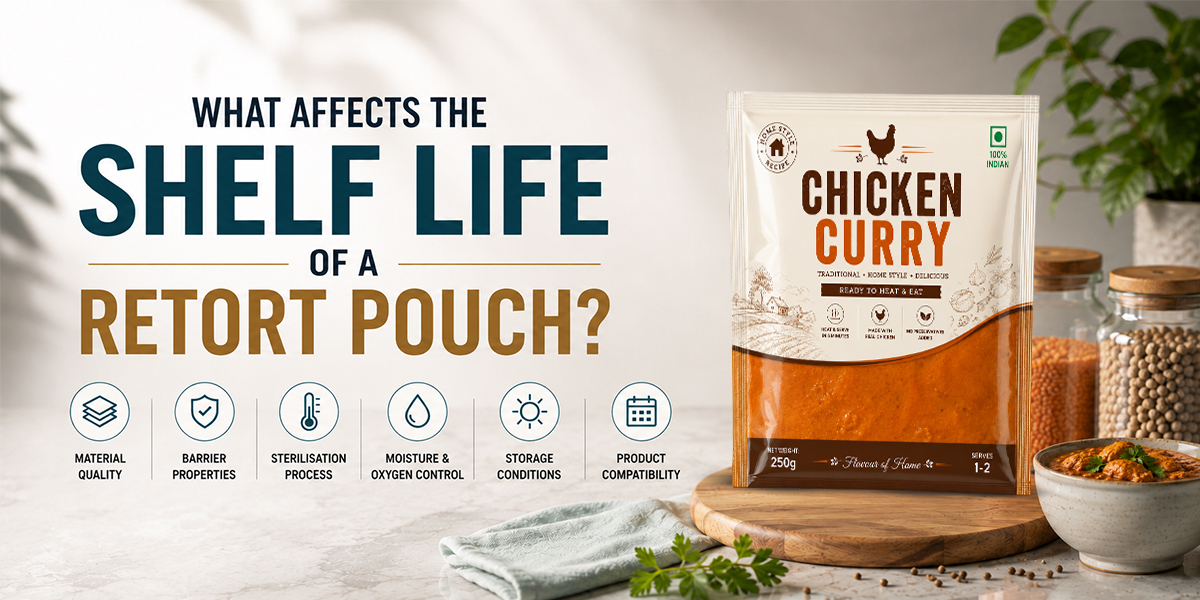
One of the biggest reasons food manufacturers choose retort pouches is their ability to keep products safe for extended periods without refrigeration.
However, the pouch alone doesn’t determine shelf life.
The final result depends on a combination of the product, packaging, processing method, and storage conditions. When these elements work together, a retort pouch can help maintain food quality from production until it reaches the consumer.
Shelf life starts long before the product is packed
Many people assume shelf life begins once the pouch is sealed.
In reality, it starts much earlier.
The recipe, ingredient quality, pH level, moisture content, and filling conditions all influence how well a product performs over time. Even with premium packaging, poor product preparation can reduce shelf life.
Packaging protects the product, but it cannot correct issues created during manufacturing.
The laminate plays a major role
A retort pouch is made from multiple material layers, each serving a different purpose.
These layers work together to reduce the transfer of oxygen, moisture, and light, helping preserve flavour, colour, texture, and overall product quality. The right laminate structure depends on the product being packed and the conditions it will face during sterilisation and storage.
Choosing the correct material is one of the most important decisions in the packaging process.
Sterilisation must be properly controlled
Commercial sterilisation is designed to make food microbiologically safe while maintaining product quality.
If the process isn’t properly validated, the product may not achieve its intended shelf life. On the other hand, excessive heat can affect texture, colour, or flavour even when the packaging remains intact.
Finding the right balance is an essential part of product development.
Related : Explore our Retort Pouches developed for heat-processed food packaging and extended shelf-life applications.
Storage conditions still matter
A retort pouch is built to protect the product, but storage conditions continue to influence long-term performance.
Exposure to excessive heat, direct sunlight, or physical damage during transportation can affect both the packaging and the food inside. Following recommended storage guidelines helps maintain product quality throughout distribution.
This becomes especially important for products travelling long distances or being exported to different climates.
Testing gives confidence
Before launching a product, manufacturers typically carry out shelf-life studies under controlled conditions.
These evaluations help confirm that the product continues to meet quality and safety expectations throughout its intended storage period. The information gathered during testing also supports production planning and packaging decisions.
Skipping this stage can create uncertainty later, particularly when introducing a new product to the market.
Final Thoughts
Shelf life is never determined by one factor alone.
It’s the result of selecting the right packaging, using a validated sterilisation process, producing the product under controlled conditions, and storing it correctly after production.
A well-designed retort pouch provides the protection needed to support long shelf life, but the best results always come from treating packaging as one part of the complete food manufacturing process.
🔗 Suggested Internal Links
References
- Flexible Packaging Association (FPA)
- PMMI – The Association for Packaging and Processing Technologies
- ASTM International – Flexible Packaging Material Standards